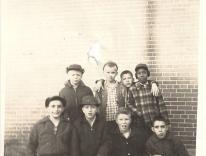
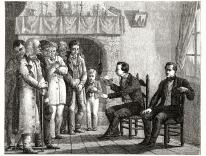
“Mr. Wycliff, the bishop says that the Catholic schools are for all Catholic children,” the priest said. “Your children will be welcome in our school.”
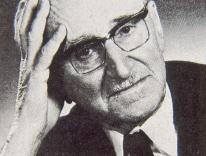
Neoliberalism now defines the political mainstream, but where do its boundaries end? Author Quinn Slobodian traces the varied landscape of neoliberal thought.
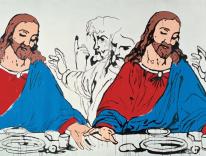
In ‘The Last Supper,’ Paul Elie tells the stories of artists whose struggles with their own religious beliefs amid the AIDS pandemic inspired often-controversial art.
John J. Lennon has spent the last 24 years in prison for murder. Now, he is the author of a book about true crime, prison reform debates, and his own experience behind bars.
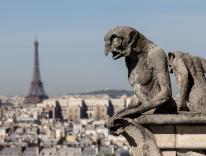
Journalist Cole Stangler traces how Paris—despite its reputation as a creative mecca—became dominated by the dullest professions capitalism has to offer.
In her new collection ‘Becoming Ghost,’ poet Cathy Linh Che tries to make sense of her family's history, the Vietnam War, and Francis Ford Coppola’s 1979 film ‘Apocalypse Now.’
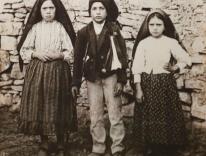
Stephen Harrigan’s book ‘Sorrowful Mysteries’ gives a stirring account of the historical, political, and spiritual impacts of the 1917 apparitions of the Virgin Mary at Fátima.
For all their differences, both Jordan Peterson and Ross Douthat engage in a pragmatic effort to enlist belief on behalf of a reactionary political project.
In Christopher White's 'insta-book' on Leo's early papacy, Pope Francis is a central figure. In Matthew Bunson's biography of the new pope, Francis hardly exists.
The neglected Danish author Henrik Pontoppidan leaves no section of human society—government, church, rural life, city living, commerce, romance—untouched by his critical eye.